


Bulk Pickup
Automation
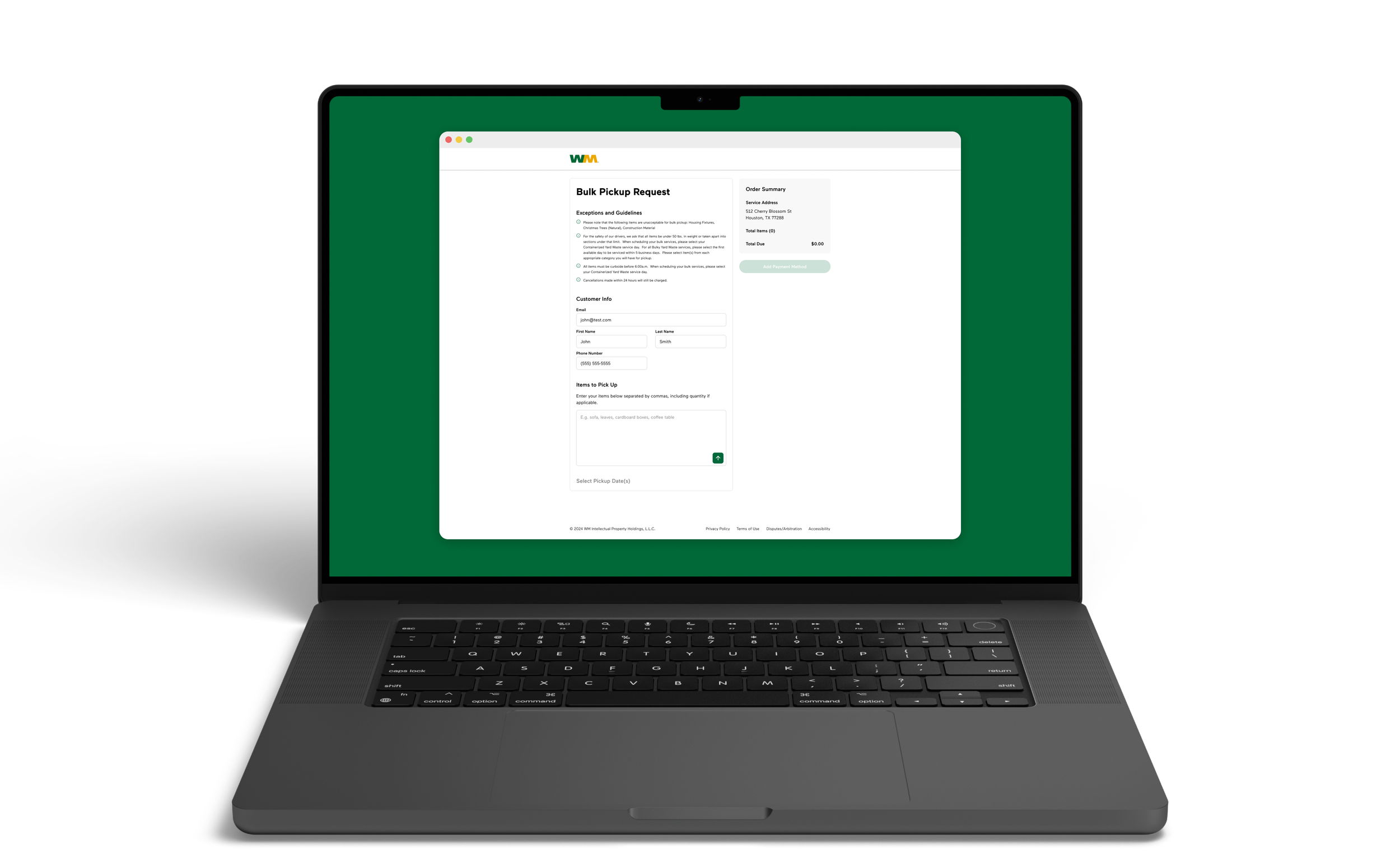
Mission: Update WM’s bulk pickup flow using new machine learning backend APIs to parse user inputs, improving efficiency
Impact: 28% faster user progress in initial testing, first implementation of customer-facing machine learning components, improved UI impressions
BACKGROUND
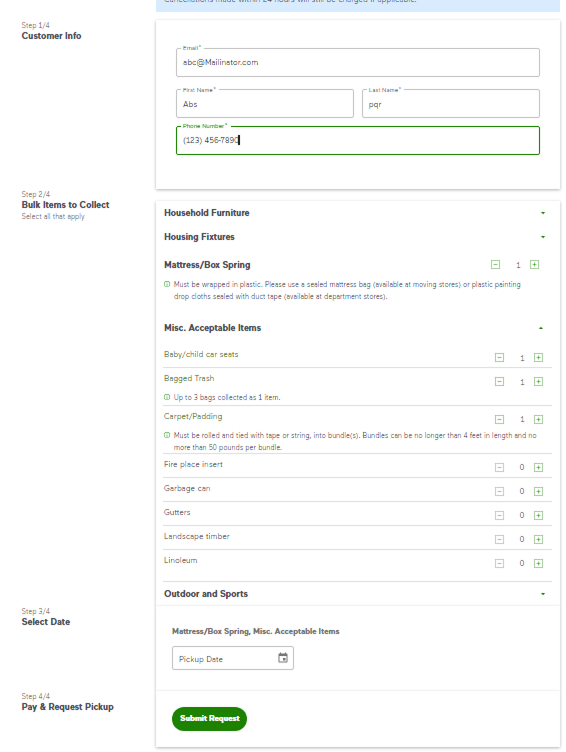
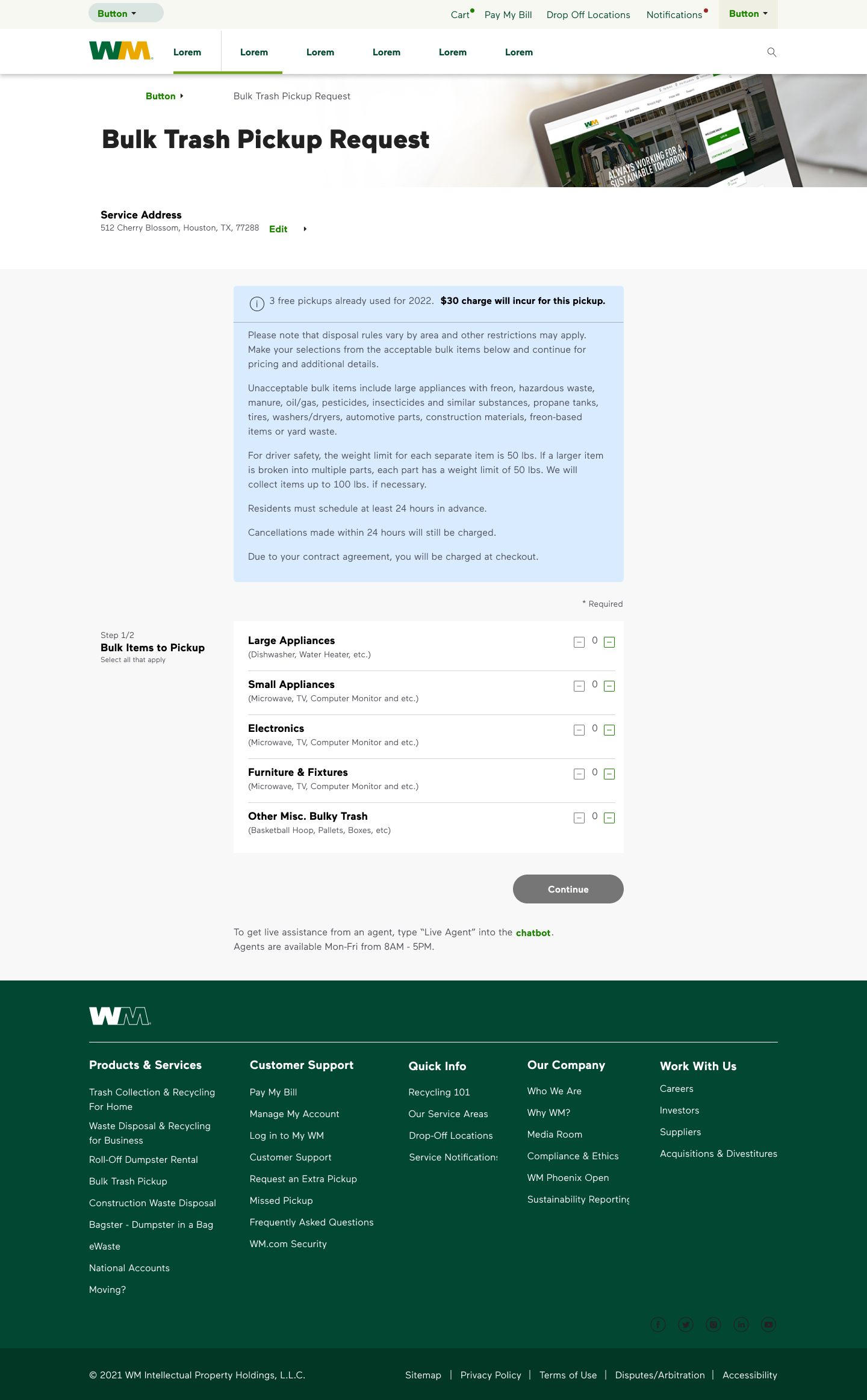
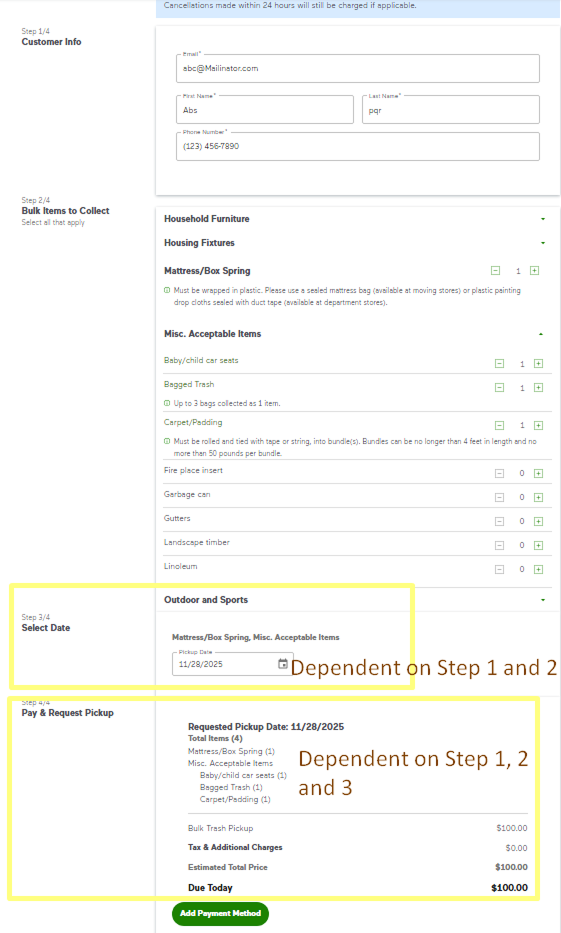
Before I redesigned it, WM’s bulk pickup flow was apropos of it’s corresponding product: bulky.
The existing system was created without any user consideration (and yes, I mean it. The previous UX/UI designers produced it with zero user input to reference). While the system made it easy to relay data into backend APIs on the business side, it was brutally tedious for customers; open endless accordions, sift through dozens of categories, and try to somehow manually narrow down to the exact item you’re looking to have picked up.
Intuitive? Not quite.
With new machine-learning tech available from the devs, I discussed a version of this flow where a user could use an input field and type out, in plain language, what they were looking to have picked up. The system could then match their input to the right item class and present them with a list to proceed with.
No more endless accordion expanding.
Alongside this new tech to power the flow, it could finally be brought up to the new design standards and use our design system components (shown in another flow above, and a request we’d submitted multiple times but which had been deprioritized each of those times).
Begin the overhaul!
RESEARCH
“I got frustrated with how long it was taking to find couch in this list. Couches seem like a common thing to want picked up, maybe you could have a frequently requested section?”
“It was just too much so I gave up and called the number I always call for stuff like this. They kept trying to tell me to use the website.”
Users did not have the nicest things to say about this flow. And it’s no surprise, considering their input had been left out of the process for the previous version!
I pulled as many mentions of the bulk pickup flow from research sessions and customer reviews as I could to get to the bottom of why this flow was so frustrating. It boiled down to two main complaints:
The process takes way too long
It feels overly complex for what is a very simple request
Because for many this task can be handled by city waste services who do not ask for specifics about the items being put out for pickup, it made the cognitive load of WM’s version feel that much heavier and unnecessary.
The new flow would need to be very simple and efficient.
“If I had more than one thing I was trying to put out I think this would have made me crazy. Really. It just takes such a long time and I have other things to do, I’m not trying to spend all day on this damn website. I mean it’s trash on the curb, which is it so complicated?”
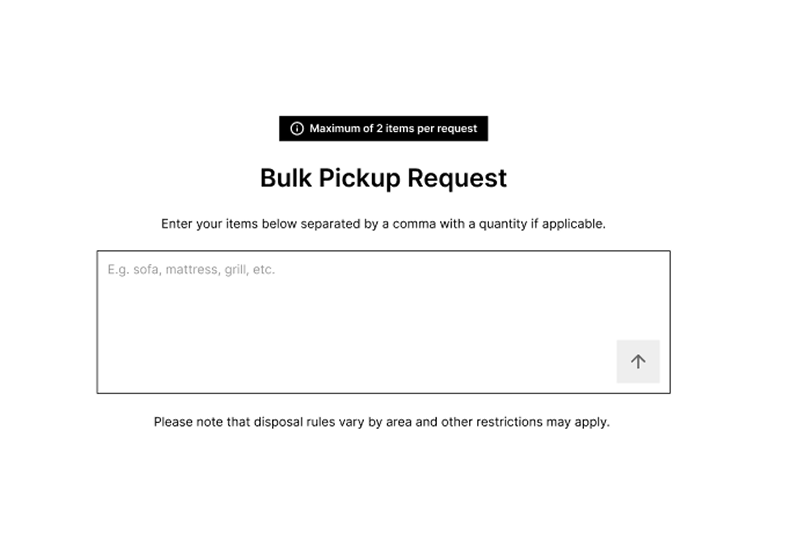
I worked with the devs to develop the simplest possible version of an input possible. I pushed for the most elemental approach: the simplest possible guidelines, one input window with example text, and the submit button to trigger the data parsing process.
Version 1
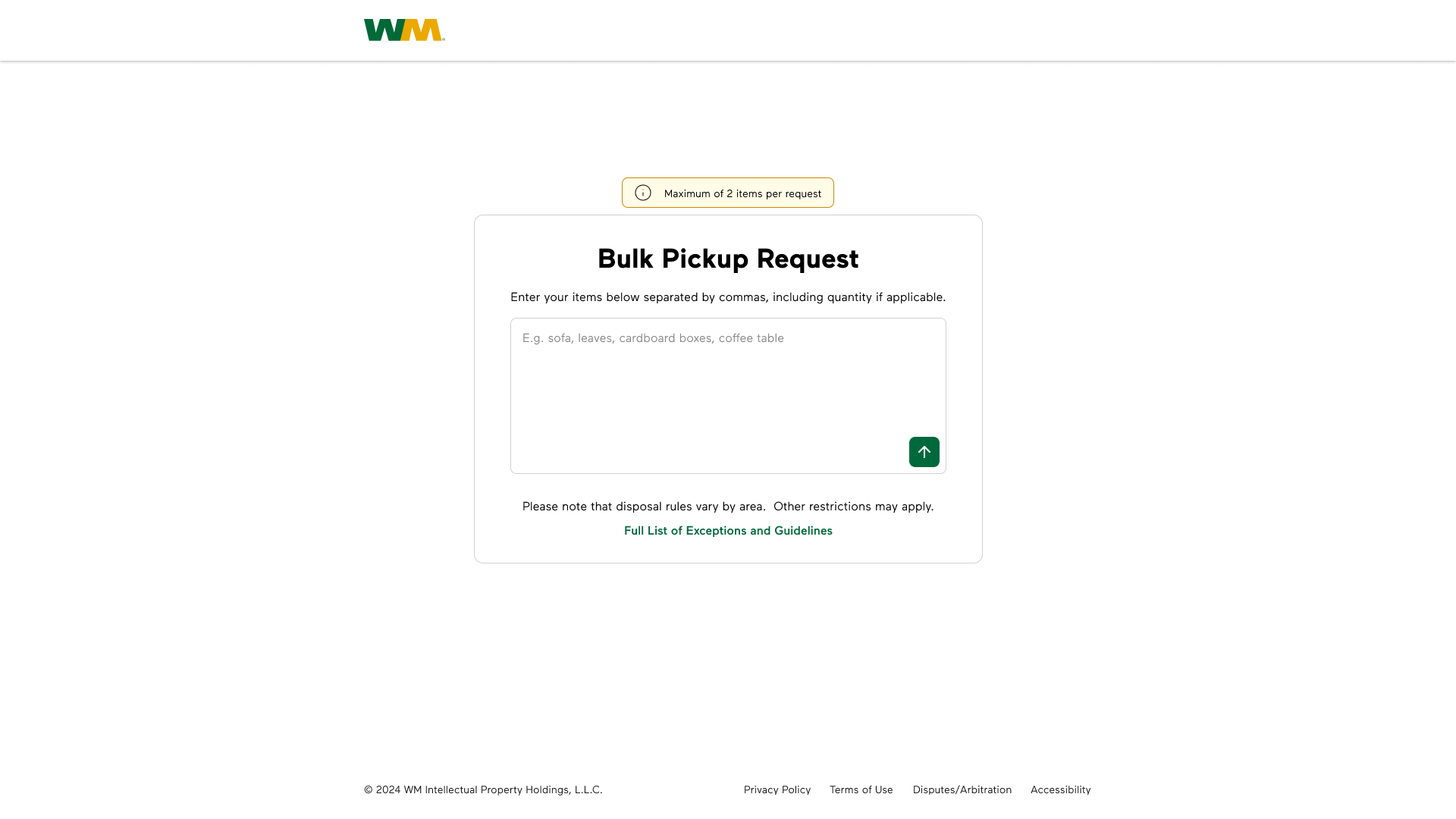
Shown here with customer input filled, this version was ultimately not approved for being overly simplistic. Business stakeholders wanted to see more legal text and guidelines on each screen of the flow.
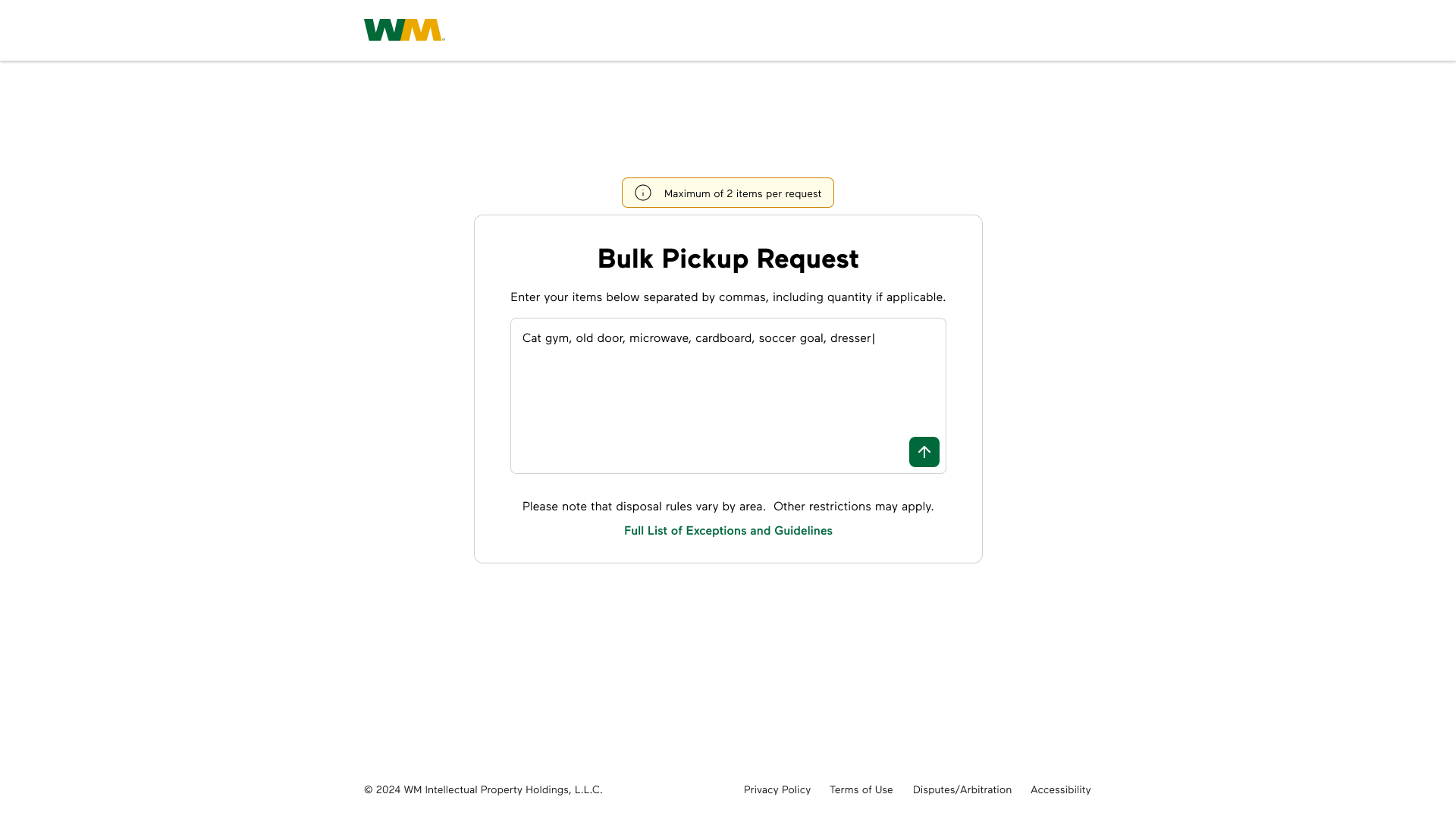
The first version of the flow that I designed jumped off from this simplistic UX concept by applying the components from the design system (input field, button style, helper text, etc) and matched the rest of the site’s UI styling.
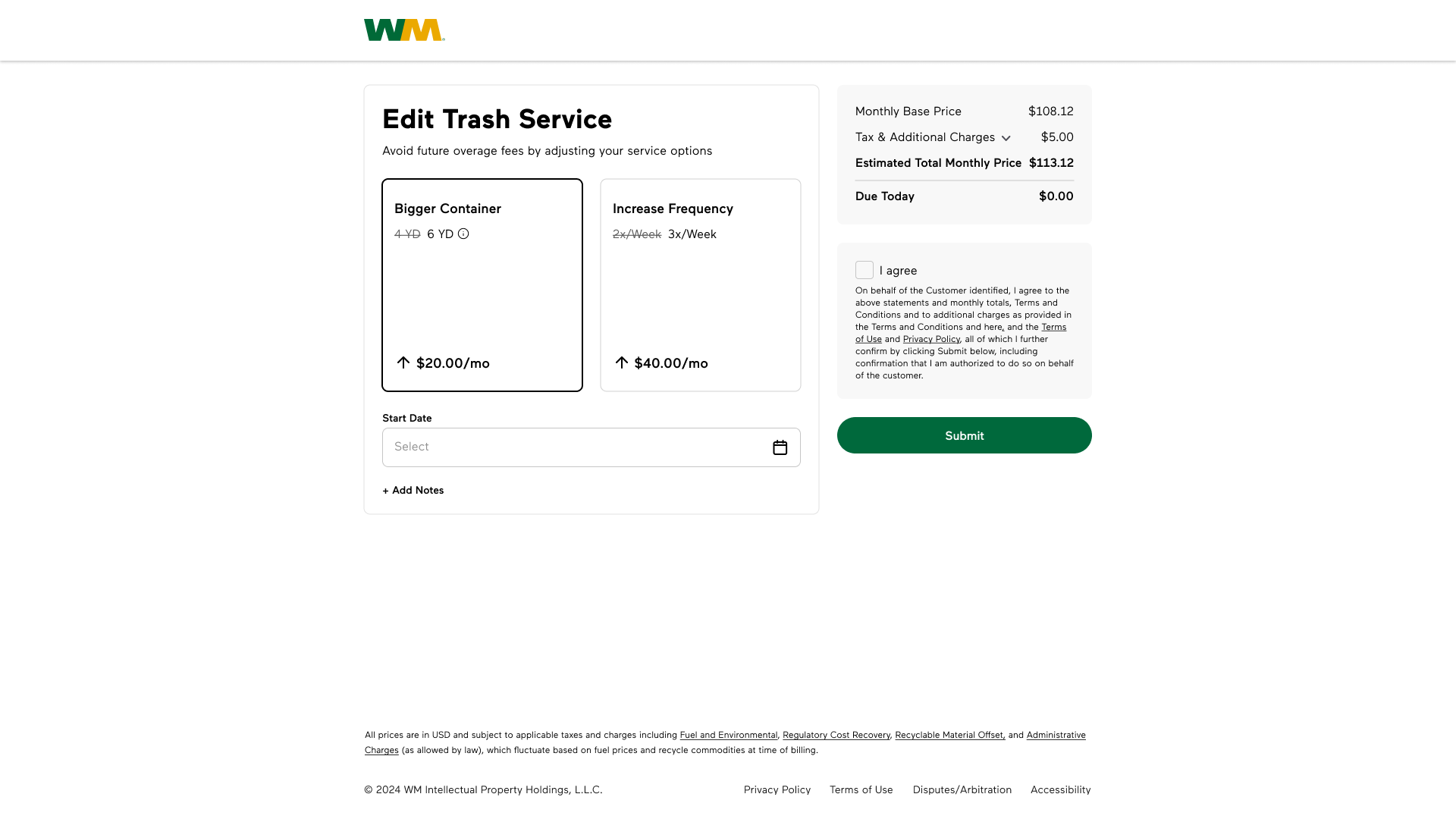
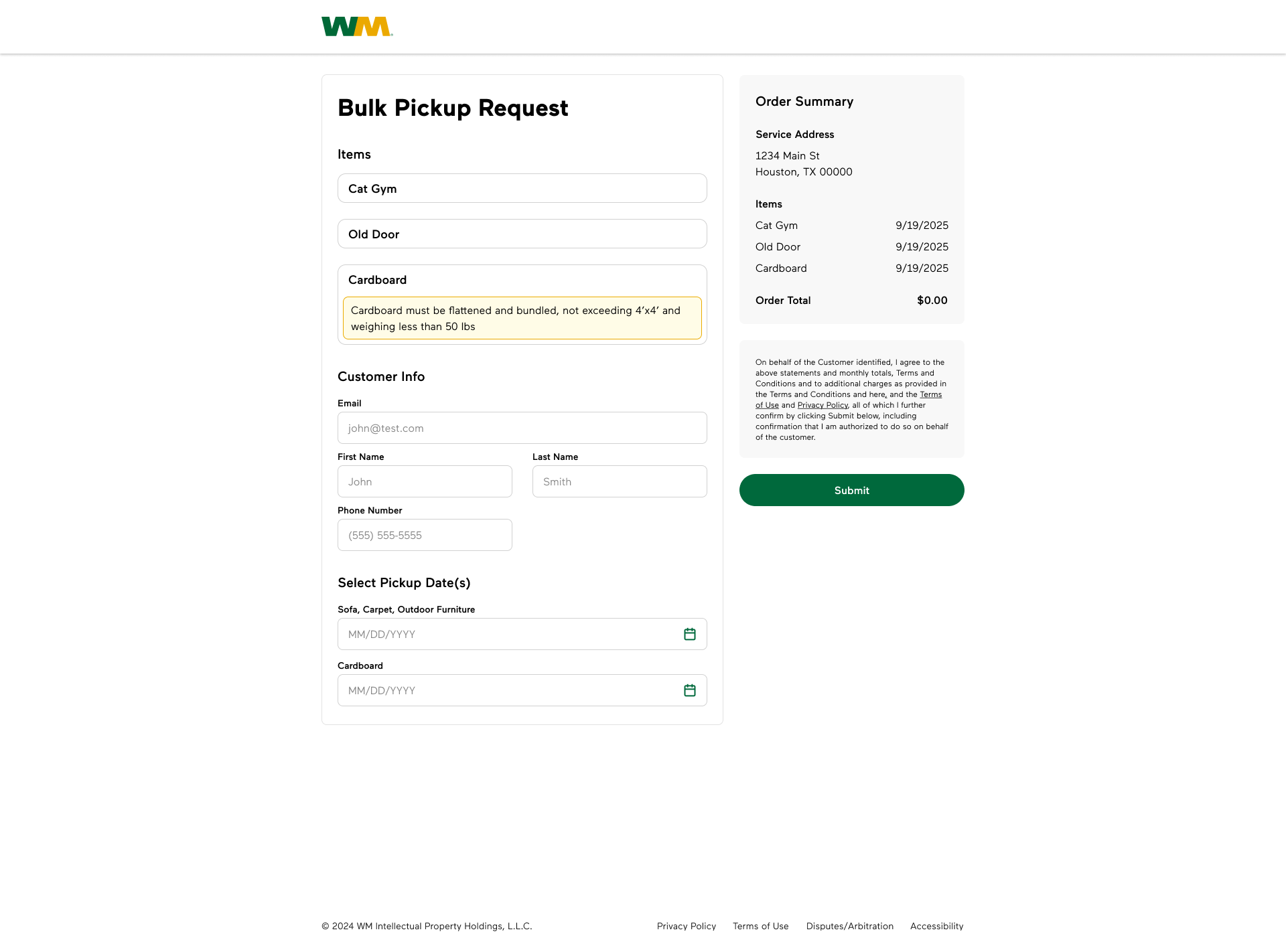
Notably, the stakeholders requested that the final flow fit within this page style that I used for the final confirmation/submittal screen (which I based on previous ecom flows I had designed earlier).

Revised Version
After revisions with the stakeholders, I landed at the version above, with the flow fitted into a scrolling left panel + fixed right summary panel setup. The goal of integrating the prompt section as seamlessly as possible was kept at the forefront of decision-making.
Though this final version was a compromise from the most simple and elegant concept version I’d suggested, the priority was integrating the new system for parsing customer inputs, which ultimately was a success.
Impact
After initial rounds with the new version before test users, we recorded the following improvements:
28% reduction in overall time spent in the flow
Noted improved UI integration with the pages before and after the flow
Successful first implementation of machine learning in any customer-facing page (!!!)
This improved Automated Bulk Pickup flow should launch sometime in the fall, and though I can no longer access internal metrics for how it performs, I’m excited for it to improve what has long been one of the clunkiest customer flows on WM’s site.